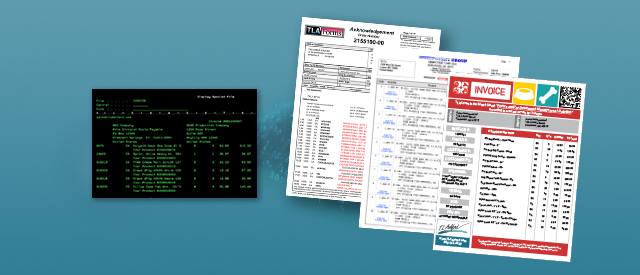
Organizations looking to modernize IBM i forms and document workflows are increasingly evaluating alternatives to traditional Advanced Function Printing (AFP) development because of maintenance costs, staffing challenges, and growing demands for dynamic digital distribution.
Modernizing document workflows shouldn’t be a burden on your development team. Transitioning to a dedicated forms management solution like TLAForms allows organizations to bridge the gap between legacy IBM i reliability and modern digital demands.
TLAForms vs AFP at a Glance
Here’s how TLAForms compares with IBM’s Advanced Function Printing (AFP), feature by feature.
| Feature | AFP | TLAForms |
|---|---|---|
| Output | Print only to IBM i printers | Print to any printer Generate the form as a PDF Archive the PDF to any network location Automatically email the PDF |
| Color | Black and white | Full color |
| Design interface | Green screen / program development interface | WYSIWYG: see your form as you design it |
| Fonts | Courier font | Expanded font selection |
| Bar codes | Bar codes; 2-dimensional codes are difficult | Easy, including 2-dimensional codes |
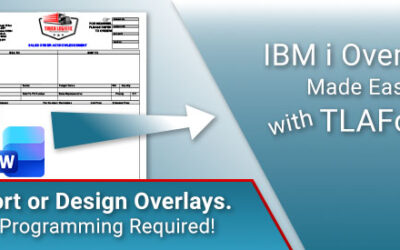
| Overlays | Overlays are very cumbersome | Use design tools to create templates |
| Images | Images and overlays are static | Images can be dynamic: use an action to decide which image prints |
| Conditioning | Conditioning takes lots of programming | Show or hide items based on criteria such as page number, or replace data as needed |
| Using IBM i file data | Uses data from IBM i files; accessing additional files requires programming | SQL: easily create SQL statements in the designer to access additional IBM i file data |
| Printer alignment | Margins vary from printer to printer, making alignment frustrating | No more alignment worries: print your form perfectly to any printer |
| Quality | Average to sub-par form quality | Outstanding form quality |
| Programming | Programming time, sometimes for highly technical work and sometimes for repetitive trial-and-error tasks like overlays | No programming |
| Cost | Free, but with heavy labor costs for a finished product that looks “meh” | Low cost, feature-rich, easy to use, with outstanding quality and industry-recognized technical support |
Reduce the AFP Programming Bottleneck
For a client that generates 40,000 forms each week, IBM i forms are constantly being added and modified to accommodate new products and requirements. Coding these forms using AFP would require a team of programmers dedicated to the project. Using TLAForms, a non-programmer can quickly create and modify forms, saving hundreds of hours and tens of thousands of dollars while freeing up resources to invest in other projects.
Moving Beyond ‘Good Enough’ Document Design
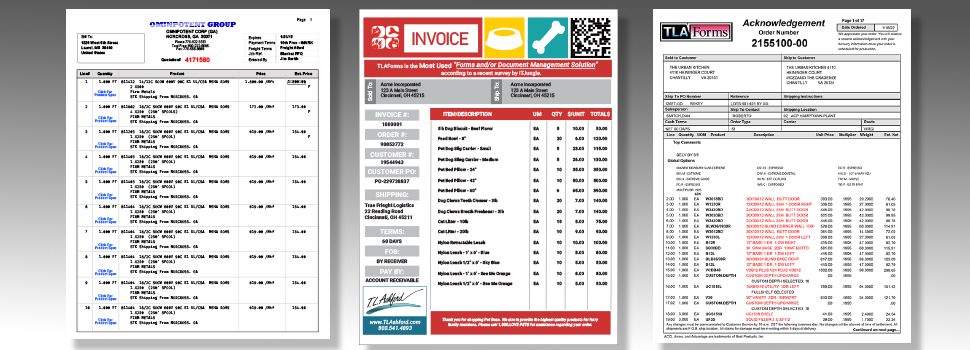
A document is often the most frequent touchpoint a customer has with your brand, but implementing seemingly simple features like expanded font selection, color, and 2D symbols often carries a high price tag in labor. The hidden cost of legacy AFP isn’t the license; it’s the specialized programming hours required for every minor font change or logo update. When forms are left in a ‘good enough’ state due to the difficulty of tweaking AFP code, it’s a missed opportunity. TLAForms replaces code-heavy adjustments with a design-first environment, allowing for full color, a wide selection of fonts, images, overlays, tables and bar codes that project the quality of your organization without requiring a developer’s intervention.
Create More Functional IBM i Forms
Conditioning data and generating forms require significant programming investment for each form. TLAForms provides tools that even non-technical staff can use to create dynamic forms.
Conditioning Form Content and Data
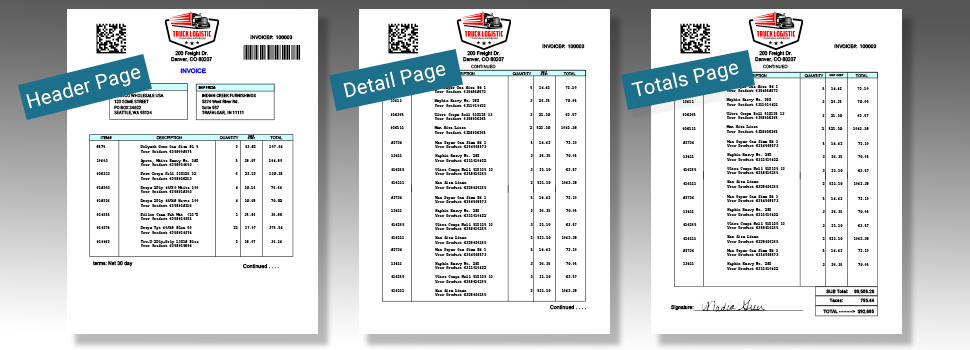
Consider a multipage form. Page one of the form is a header page, the last page is a summary page, and the pages in between are detail pages. Accomplishing this with AFP requires custom coding for each form. Instead of writing RPG logic to handle page breaks or overflow, the TLAForms graphical designer can apply conditional rules directly within the form layout. This separates the data from the presentation – a hallmark of modern software architecture.
Automate Distribution Logic Without Custom Code
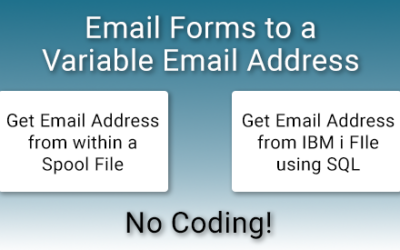
Determining how a form should be distributed can require significant programming resources. Should a form be printed? What printer should it be sent to? Should it be emailed or sent to the archive? For example, an RPG-based order-entry application generates spool files for invoices. TLAForms can automatically determine whether the customer should receive the invoice via email as a PDF attachment, route the document to a warehouse printer, or archive the PDF for compliance retention, all without custom AFP programming.

Watch: Modernizing IBM i Documents with TLAForms
See these features in action in our Innovation Hour session from March 2026.
Modernize IBM i Forms for the Future
Many organizations still rely on legacy overlays and printer-file customization maintained by developers nearing retirement. As the pool of developers familiar with complex AFP printer files shrinks, migrating to a graphical interface isn’t just about features—it’s a matter of risk management and ensuring business continuity. The functionality and ease of use of TLAForms empower your remaining technical resources to improve productivity while creating documents that reflect the quality of your organization.
Modernizing your IBM i output doesn’t have to be a multi-year project. It starts with choosing a tool that empowers your current team to meet tomorrow’s digital demands. Learn more about TLAForms for IBM i document management and request free trial software.